

Providing the skills, confidence and inspiration to make a difference!

The Environmental Leadership Program is an interdisciplinary community-based learning program that matches student teams with non-profit organizations, government agencies and businesses to address community-defined environmental issues. With the overarching objective of developing reciprocal and mutually-beneficial partnerships between students and community organizations, our goals are to provide:
Our goals are to provide:
- Undergraduate students with unique and practical learning experiences that develop their professional, leadership, technical, problem-solving, collaboration, and communication experience and skills;
- Graduate students with project management, mentoring, and team-building experience and skills; and
- Organizations with high-quality services that further their missions.
Our projects take place primarily on the traditional homelands of the Kalapuya peoples. We recognize this land acknowledgement is just a starting place–an invitation for us to consider what our settler-colonial history means for our pedagogical practices and our community-based work, as well as inspiration to redouble our efforts to develop courses and community-based projects that promote environmental and social justice.
Projects
We develop our projects cooperatively with community partners. Depending on partners’ needs, projects can address environmental education and outreach, natural resource management, habitat restoration, species conservation, environmental monitoring, sustainable business practices, ecotourism, recreation management, environmental justice, and other topics.
Currently, we have four primary focal areas.

In our Conservation Science in Action projects, students assist community partners by completing hands-on restoration projects, creating assessments and management plans, or acquiring and analyzing needed environmental data.
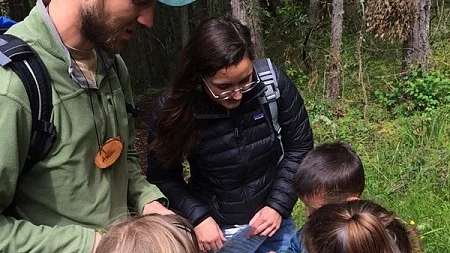
In our Environmental Education projects, students develop, implement, and share transformative learning experiences for children in nature. Students create scientifically rigorous curricula, teach programs in classrooms and conduct field trip activities.

In our Community Engagement and Justice projects, students work directly with communities to address our pressing environmental and social justice issues. Through methods such as oral histories, science communication, creative works and direct action, these projects seek to center and amplify voices that have often gone unheard and generate new approaches that build inclusive and resilient communities.

In our Sustainable Practices projects, students implement solutions that address and integrate concerns regarding environmental health, social equity, and economic success. Example projects include renewable energy, waste prevention and recycling, alternative transportation, sustainable business, and organic agriculture.
How to Apply
Applications are due Friday, October 30, at 9:00 a.m.
The Environmental Leadership Program is open to undergraduates with at least junior standing, although priority consideration will be given to Environmental Studies and Environmental Science majors, especially to students graduating in Spring 2027.
While there are currently no two-term Conservation Science in Action projects scheduled for the 2026-27 academic year (Peg Boulay has retired!) please check back in winter term, as we will be offering a one-term Conservation Science in Action project in spring 2027. We realize this won't meet all the demand for hands-on conservation science field work. However, you can also gain experience with an internship. See the ENVS 404 Internships website for more information on how to find, register, and get credit for an internship.
Winter-Spring 2027 Projects
ENVIRONMENTAL EDUCATION PROJECTS
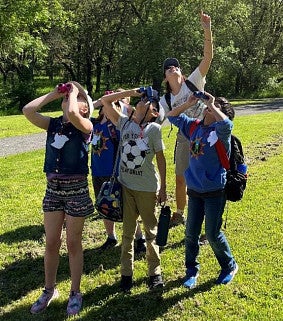
Aves Compartidas 2027
Working in partnership with Ecology in Classrooms & Outdoors (ECO) and River Road Elementary School, this team will develop and implement activities that explore the amazing world of birds. We will focus on the migratory birds that connect us with our partner watersheds in Mexico and Costa Rica. We’ll integrate World Migratory Bird Day into our activities and raise awareness of the need for the conservation of migratory birds and their habitats. The team will facilitate five weeks of classroom lessons and lead three field trips – one each for the third, fourth and fifth grade – in spring term. Previous experience birding and/or Spanish is useful, but not required. This project will build on the work of the Aves Compartidas 2025 team.
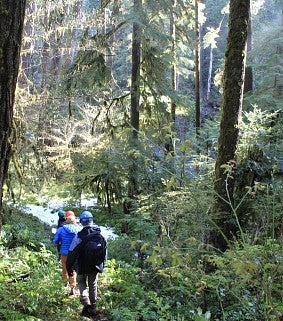
Climate Science 2027
This team will engage middle-schoolers in learning about old-growth forests and climate science. Your mission will be to show science in action and engage students in an interdisciplinary exploration of climate issues. You’ll implement investigations that collect and examine data related to native flora, nature’s calendar, microclimates, and wildfires. The team will lead full day field trips to the Andrews Forest in spring term. You’ll be working in partnership with the H.J. Andrews Experimental Forest and various local schools. A background in ecology, climate science and/or wildfire is helpful, but not required. This project will build on the work of the Climate Science 2025 team.
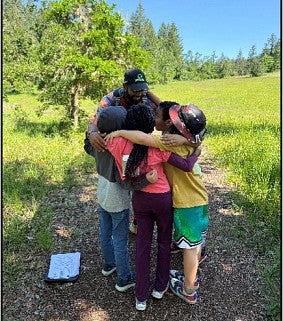
Wild Wanderers 2027
Get out onto the trails at Mt. Pisgah Arboretum with first and second graders to help them cultivate a personal connection to nature. The team will facilitate classroom pre-trip lessons on Tuesdays and all-day field trips on Thursdays in spring term. Activities will focus on cultivating joy and sensory awareness – including scavenger hunts and nature journaling – with the goal of providing a warm, cooperative social context for connecting with each other and nature. You’ll be working in partnership with MPA and various local elementary schools. This project will build on the work of the Wild Wanderers 2025 team.